Front desk picks up between charts; new patients wait.
New patients hang up before someone reaches the phone. The assistant answers while the desk finishes the in-person check-in. The request is in the dashboard.
Industry
Loading…
For NY-licensed independent medical, dental, and therapy practices
VoiceLab does not publish a dollar figure or national missed-call rate for medical practices. Source: 42 CFR 482.24 (CMS hospital medical-record Conditions of Participation). After go-live the console counts after-hours appointment requests captured on this line; this page does not infer a practice miss-rate from that rule.
For NY-licensed independent medical, dental, and therapy practices. VoiceLab is an operated front desk: the team sets it up, tunes it to hours, location, accepted-plan list, and visit prep you verify, and runs it. The assistant captures name, callback number, and reason for calling, and hands anything clinical to your team as a complete message. It gives no medical advice.
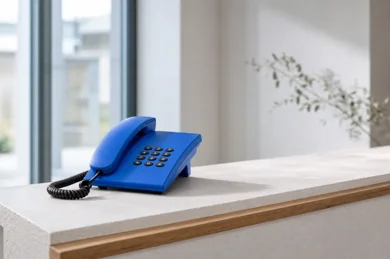
New patients hang up before someone reaches the phone. The assistant answers while the desk finishes the in-person check-in. The request is in the dashboard.
After-hours callers asking about re-bookings, refills, or results get a clear next step — and the request, with name and callback number, is captured so staff return the call with the chart open.
The assistant sticks to verified front-desk facts — hours, location, what to bring, which plans you accept. Anything clinical becomes a complete captured message.
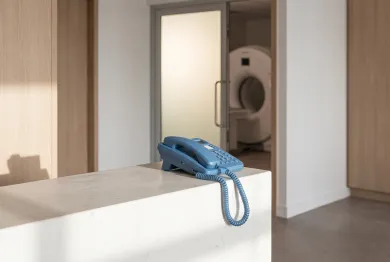
Callers ask which studies you offer, where to park, and what to bring. The assistant answers from the facts you verified and takes the appointment request with a callback number for your scheduler.
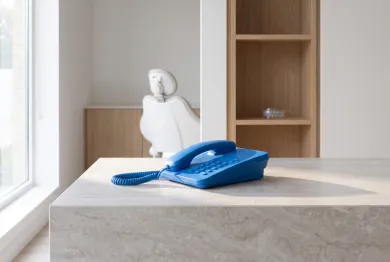
New-consult calls and aligner check-ins arrive between chair times. The assistant takes the consult request, notes the office the caller prefers, and leaves a complete message for your treatment coordinator.
Refill and results calls become complete messages with a callback number, so the desk returns them with the chart open. The assistant gives no medical advice and sends symptoms to your team.
An illustrative conversation. Business names and caller details are fictional; your call flow is prepared with your team.
| Speaker | Line |
|---|---|
| Caller | I'm a new patient — do you take Oxford? |
| Assistant | This is the front desk for Riverside Internal Medicine. I can check the accepted-plan list. Your name and callback number? |
| Caller | Elena Ruiz, 718-555-0118. |
| Assistant | Elena Ruiz, 718-555-0118. Oxford is on the accepted-plan list as of the sheet dated this month. I can take a new-patient request. Preferred days? |
| Caller | Tuesday or Thursday after 3. I have a cough I want checked. |
| Assistant | I captured a new-patient request for Tuesday or Thursday after 3. I cannot advise on symptoms. The desk will call you back to set the visit. If this feels urgent, use 911. |
| Boundary | Detail |
|---|---|
| No diagnosis | The assistant does not interpret symptoms or name a condition. |
| No triage | Urgent-sounding calls are told to use 911. Everything else becomes a message. |
| No claims path | The assistant does not quote coverage, prior auth, or what a plan will pay. |
We prepare your assistant with the facts your team verifies: hours, locations, services, and the right person to contact. Example questions:
Tell us how your business handles calls. Our team will arrange a conversation with you.